


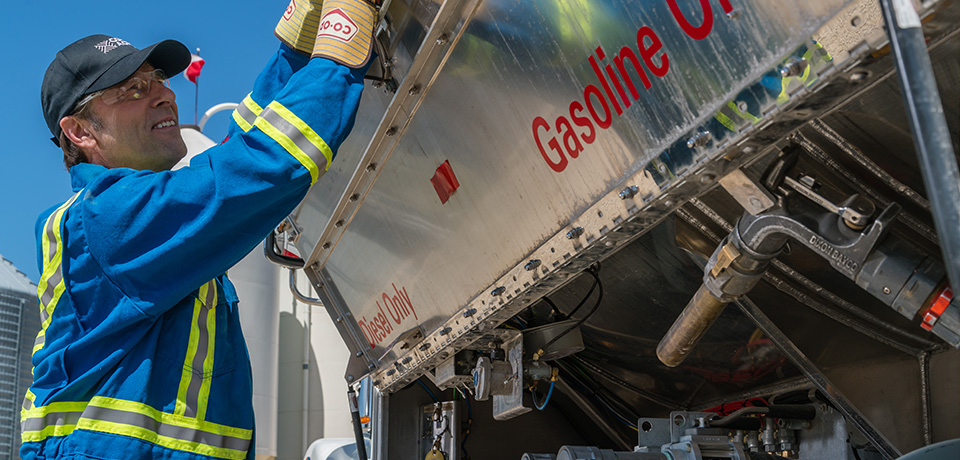
No matter if you’re working in the field, driving a truck or fuelling up equipment, safety should always be top-of-mind. Your best bet is to implement safety procedures for energy products across your entire operation, adhere to them 100 per cent of the time and make them a habit.
Fuelling
Always turn off your vehicle or equipment when refuelling, and extinguish any open flames or pilot lights. Stay near the nozzle at all times, which will help reduce the risk of a hazardous spill.
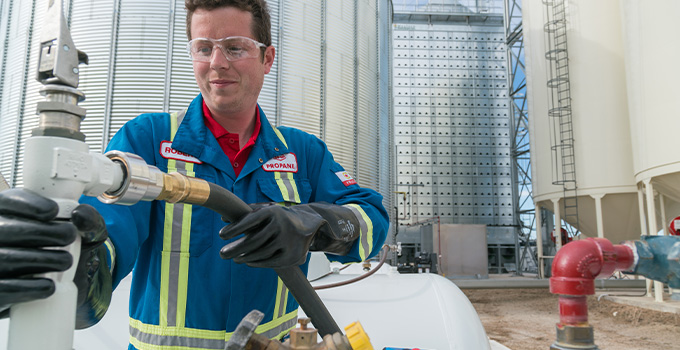
Avoid using cell phones or electronic devices when refuelling as they can be a distraction. Never smoke, light matches or use lighters while refuelling or when you are within 7.5 metres of the refuelling area. To avoid a static electricity buildup and spark, only fill CSA-approved containers, place them on the ground for filling and always keep the nozzle in contact with the container.
In the unfortunate event of a flash fire, back away, and most importantly, leave the nozzle in the vehicle or piece of equipment. Leaving the nozzle in place is the safest action and may prevent the fire from spreading.
More safety tips:
- Never prop open the nozzle trigger with other items – use only the hold-open latch equipped on the nozzle (if applicable).
- Always be mentally and physically equipped to perform the refuelling task.
- Do not allow children to refuel.
- Do not boost your vehicle within 7.5 metres of a refuelling area.
Lubricants
Lubricants are extremely sensitive and flammable, meaning you must take extra caution during handling and storage. Wear flame-resistant and CSA-approved personal protective equipment (PPE) to avoid injury while handling lubricant products.
When pouring lubricant products, always scan the filling area for slipping or tripping hazards, sources of ignition or other hazardous situations or materials. While dispensing, determine the volume you need to fill, and verify the correct product is dispensed into the correct piece of equipment.
Propane
Safety begins with the installation of propane tanks. Propane storage, handling, contractors, equipment and appliances all fall under provincial jurisdiction. It is the tank owner’s responsibility to ensure that all tanks comply. For tanks 2,500 USWG or less, the pressure-relief valve in the tank must be replaced every 25 years.
Staying up-to-date on changing codes is important. For example, take note of the two following updated regulations:
- Propane suppliers are no longer permitted to fill propane tanks on portable trailers. In order to be filled, all tanks must be on stationary, permanent blocks (such as solid steel or concrete foundations).
- In order to be refilled, the maximum allowable working pressure (MAWP) of tanks must be a minimum 250 PSIG (1,750 kPa).
Success is getting home safe
Cutting corners is never worth it and could put you and your family’s safety at risk. That’s why it’s important to lean on a support network of trusted partners who can help navigate any questions you might have about safe energy-handling practices.
Co-op employs trained professionals who provide full-service installations for bulk energy applications, make bulk energy deliveries, pull appropriate permits and give expert advice.
For questions regarding safe energy practices or help with on-site fuel management, speak with your local Fuel Team member today.