


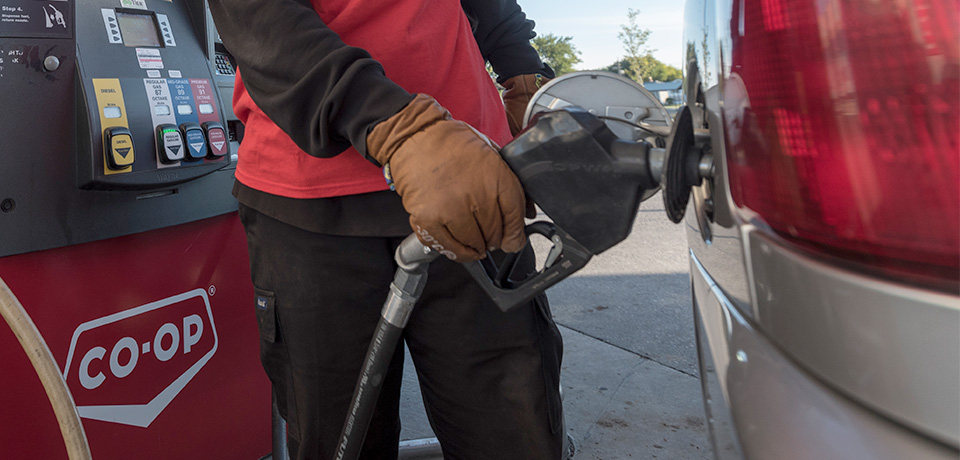
As of July 1, 2023, the updated Canadian Clean Fuel Regulations went into effect. The federal climate plan commitment focuses on reducing emissions, promoting clean technologies, and supporting sustainable jobs. As part of Co-op’s own ongoing commitment to sustainability, actions to adapt to new requirements and help customers comply are already underway.
What are Canadian Clean Fuel Regulations?
According to the Government of Canada, the Clean Fuel Regulations aim to make the gasoline and diesel used in Canada cleaner while providing more affordable alternatives for consumers. Over time, these regulations will ensure that the fuels become increasingly more environmentally friendly.
Starting July 1, 2023, suppliers who produce or import gasoline and diesel in Canada need to reduce the amount of carbon dioxide emissions released throughout the fuel’s entire life cycle, including extraction, refining, distribution, and use.
Moreover, the limit for the carbon intensity of gasoline and diesel will be lowered each year. According to the estimation by Environment and Climate Change Canada, the ultimate reduction will be 15% below the 2016 levels by 2030.
The 2023 fuel carbon-intensity limits measured in gCO2e/MJ for gasoline and diesel are 91.5 and 89.5 respectively. With the Clean Fuel Regulations ongoing plan in action, these numbers will drop to 81.0 and 79.0, reducing 0.5 gCO2e/MJ each year.
Canadian Clean Fuel Regulations: Co-op’s Outlook
“We certainly support the transition to the low carbon economy for the country, and we expect to have a very important role in this process,” said Patrick Bergermann, Associate Vice President of Energy Roadmap at Federated Co-operatives Ltd (FCL).
According to Bergermann, the upcoming regulations coming into effect will definitely present some challenges for the fuels and their downstream distribution partners. But at the same time, many Co-op customers are already adopting more sustainable approaches in their practices, which sets the company on the track for offering higher content of renewable components in fuels each year.
“We are set to do what we need to under the regulations to be in compliance and make sure that we aren’t only meeting the minimal requirements. We intend to successfully transform the business economically and in accordance with the guidance from the country. This means that we will be seizing the best opportunities for decarbonizing our business, potentially in unique ways from others in the industry since we already have strong relationships with many farm customers who could provide feedstock for renewable fuels production,” Bergermann added.
Best Practices for Complying with Canadian Clean Fuel Regulations
“For Co-op customers, the transition into the new regulatory environment should be virtually seamless,” said Bergermann. “The contents of existing fuels will adjust in line with the requirements, gradually helping decarbonize the transportation fleet across Canada.”
However, there are several practices Co-op members can adopt now to further reduce their fleet’s carbon footprint. These include:
- Optimizing route planning with the help of routing software to reduce mileage and fuel consumption.
- Educating fleet operators on eco-friendly driving techniques such as smooth acceleration, steady speed, and reduced idling.
- Monitoring and improving fuel consumption through continuous data analysis and expert consultation.
- Regularly maintaining and servicing the vehicles to ensure optimal efficiency.
- Tracking emissions to remain within compliance limits and set informed goals for upcoming years.
According to Bergermann, the fuel product line presented at Co-ops across Western Canada will continue to evolve alongside constantly upgrading regulations. Co-op members using hydrotreated renewable diesel blends, traditional biodiesel, and ethanol-containing fuels have already started to experience the transition into gradual decarbonization.
Co-op’s Fuel Team members help local members and customers to understand available fuel options and how they can optimize fleet performance while making sustainable choices.
Canadian Clean Fuel Regulations: Next Steps
Environment and Climate Change Canada estimated that the carbon intensity of fuel consumption will reduce by 15% below the 2016 levels by 2030. This change is entirely possible with the unified commitment of producers, retailers and consumers.
Continuous education on sustainable fuel choices facilitates easy adjustment and compliance with government regulations. Additionally, it cultivates the mindset necessary for a greener and more environmentally conscious future. The knowledge empowers us to make informed choices that reduce our carbon footprint, promote renewable energy, and mitigate climate change.
The good news is, as the Canadian Clean Fuel Regulations come into effect, Co-op fuel customers can feel assured that the products they count on are in compliance with the regulations. As the product contents are calibrated to meet the requirements, Co-op Fuel Team members will continue to inform and offer suitable choices to their local communities.
To learn more about Co-op’s industry leading lineup of fuels, talk to your local Fuel Team member.